By the time Rockefeller entered the petroleum refining business, the technology was standardised and commoditised. He was a bookkeeper, an accountant. Not a chemist, an engineer or a scientist. Everyone and their cousin was starting a refining business. In an industry with no moat and nonsensical competition, how did he build a monopoly? How did Standard Oil’s products reach as far as Europe and Asia? How did he not merely win but dominate an impossible conquest?
I’ll try to answer them in a series of posts.
Building a monopoly in an industry with no moat is a paradoxical puzzle that takes nothing short of a genius to solve. Rockefeller was one.
Part 1: Get the yield up
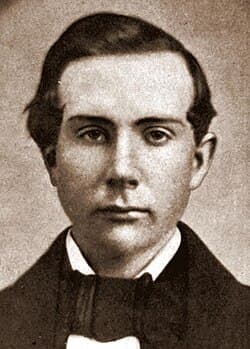
In the early days of refining, most refiners were wasteful. Most of the refiners didn’t know whether they were making any money or losing money and paid no attention to how efficiently they refined oil. Growing up poor instilled a sense of ruthless financial and material accountability in Rockefeller. He devised plans to produce by-products from “wasteful” residues and generate new lines of revenue.
While most refiners leapt into the oil industry hoping to cash in on an elusive opportunity, Rockefeller embraced it as a true missionary and played the long game. Becoming economically efficient unlocked a second-order advantage available only to Rockefeller—economies of scale in distribution.
More in part 2.